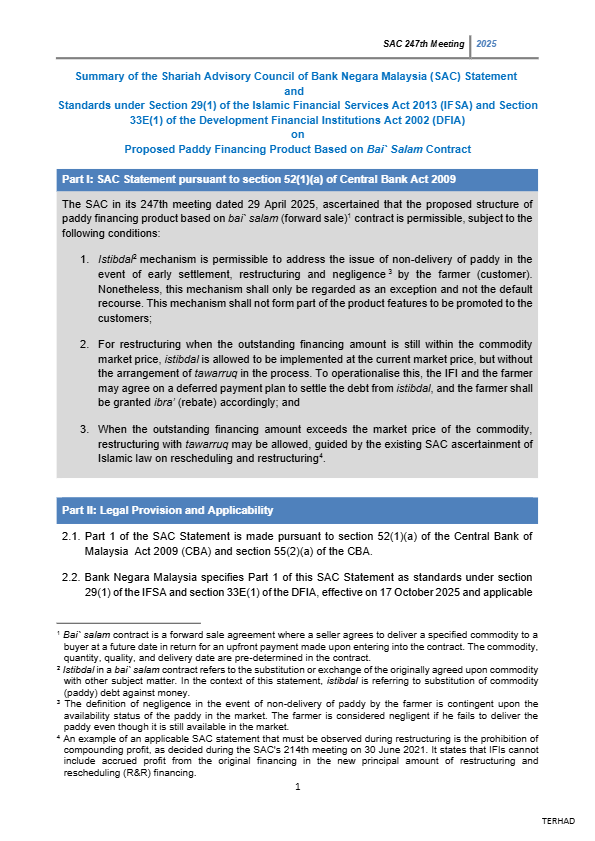
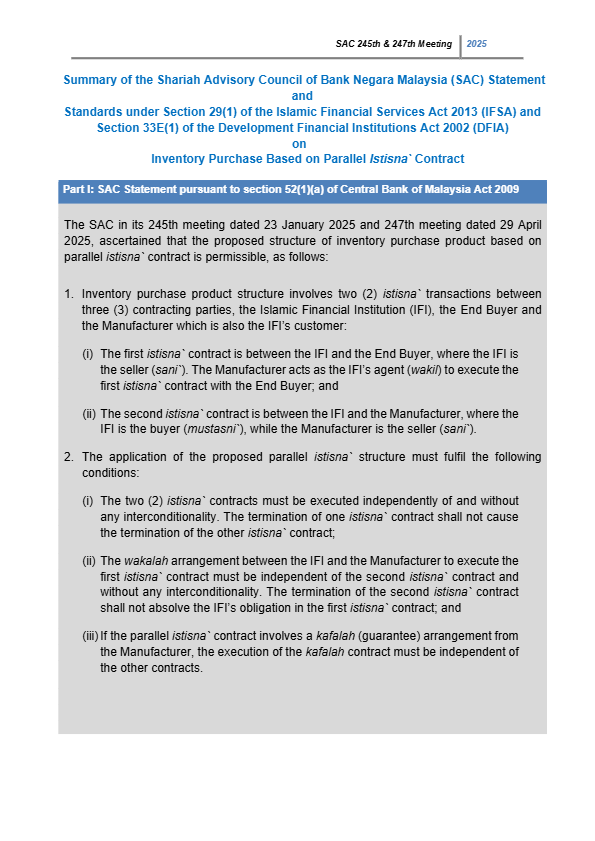
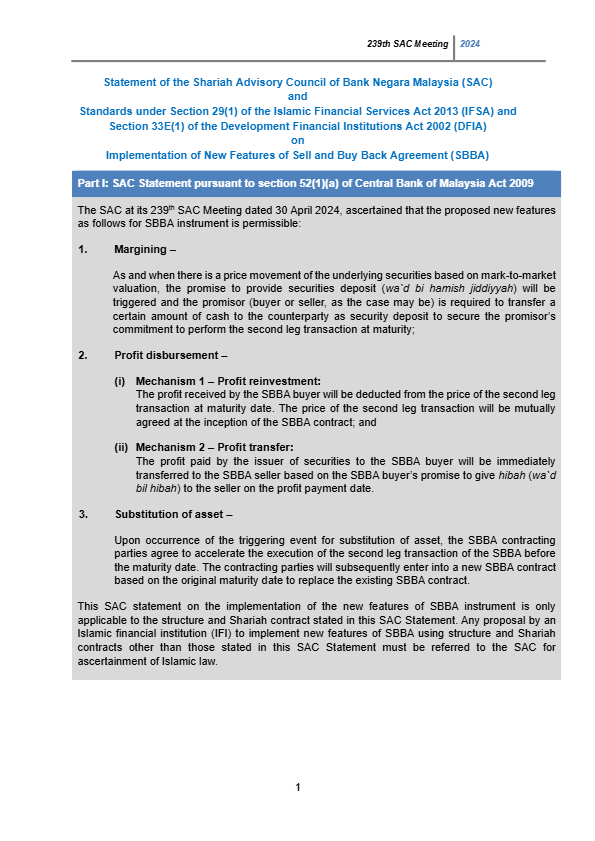
For Islamic financial institutions to have credibility, formal procedures for Shari’ah governance are required; otherwise clients would have no assurance that the institution is upholding the principles of Islam in its financial dealings. This formal assurance can be provided by national law, as in the case of Iran, which enacted the Law on Interest-Free Banking of 1983, under which all banking operations had to be Shari’ah compliant. Malaysia passed an Islamic Banking Law the same year, but it created a dual system whereby licensed Islamic banks could compete alongside those operating conventionally. Unlike in Iran, however, Malaysia instigated a system for ongoing assurance by establishing Shari’ah Boards for the Central Bank and the Securities Commission with the power to deliver fatwa, and boards at the level of each Islamic bank to ensure that the financial products they offered are Shari’ah compliant and conform to the requirements of the centrally issued fatwa. At the other extreme, the countries of the GCC have devolved all Shari’ah governance to the institutional level, although many Islamic banks recognise the rulings of the Shari’ah Board of the Bahrain-based Accounting and Auditing Organization for Islamic Financial Institutions (AAOIFI) and the Organization of the Islamic Conference (OIC) Fiqh Academy. This paper discusses the merits of centralised versus devolved Shari’ah governance and considers what competences and experience Shari’ah Board members should have. The Islamic Financial Services Board has recently issued guidelines on Shari’ah governance. These are evaluated, including the conditions for the appointment of Shari’ah Board members, their mandate, procedures for the conduct of meetings, and lines of accountability and reporting.