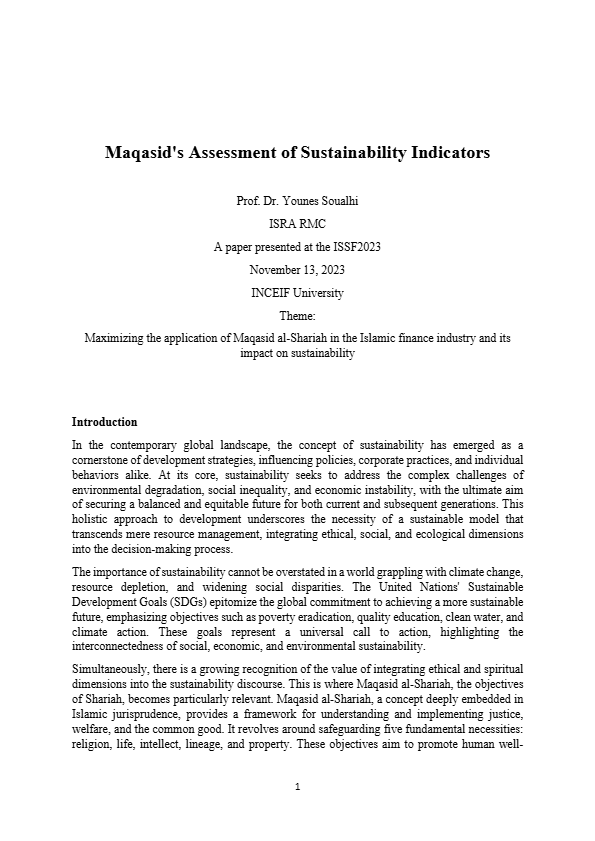
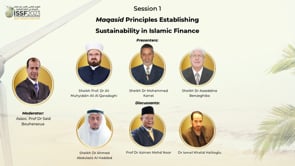
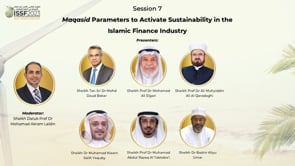
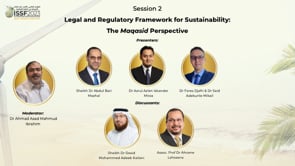
This topic explores how Maqāṣid al-Shariah can be used as an ethical and evaluative framework for sustainability within the Islamic finance industry. It highlights the growing global importance of sustainability in addressing environmental degradation, social inequality, and economic instability, as reflected in initiatives such as the UN Sustainable Development Goals (SDGs).
The study emphasizes that Maqāṣid al-Shariah offers a holistic and value-based approach to sustainability by safeguarding human well-being through the preservation of religion, life, intellect, lineage, and wealth. This framework aligns closely with sustainability goals while adding an ethical and spiritual dimension often absent in purely quantitative models.
It argues that unlike conventional approaches focused mainly on measurable indicators, the Maqāṣid framework integrates moral and ethical considerations, ensuring that sustainability practices are not only efficient but also just, balanced, and beneficial for both people and the environment.